
We are glad to announce that we launch a new research project around the Galápagos giant tortoise (Chelonoidis niger-species complex)! Those gentle giants from the Pacific Galápagos archipelago westwards from the South American mainland are famous for inspiring Charles Darwin’s On the Origin of Species.
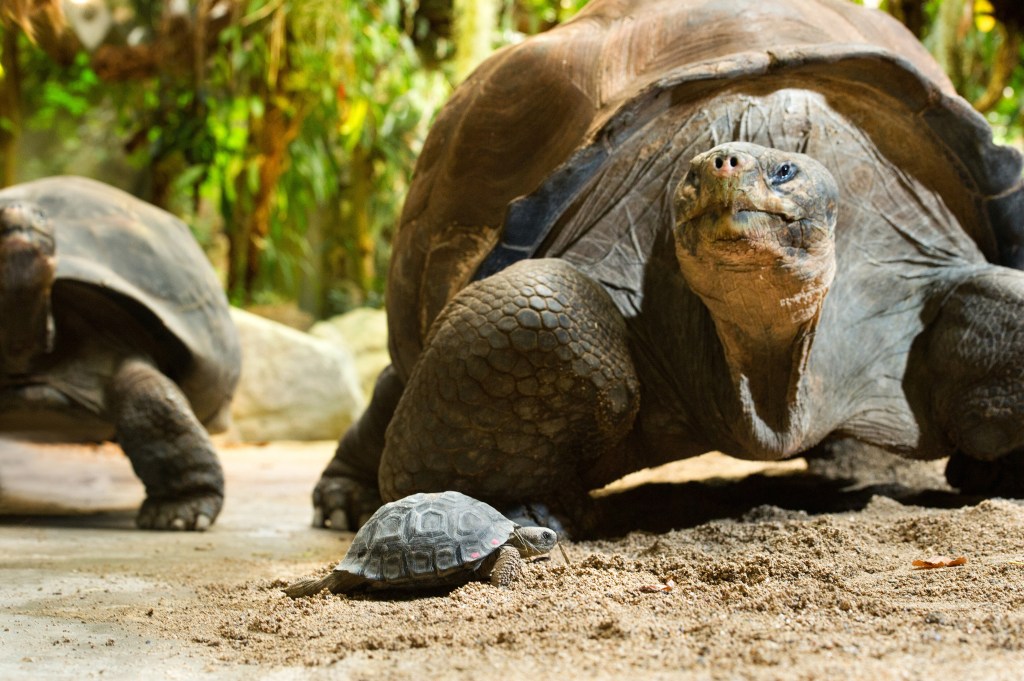
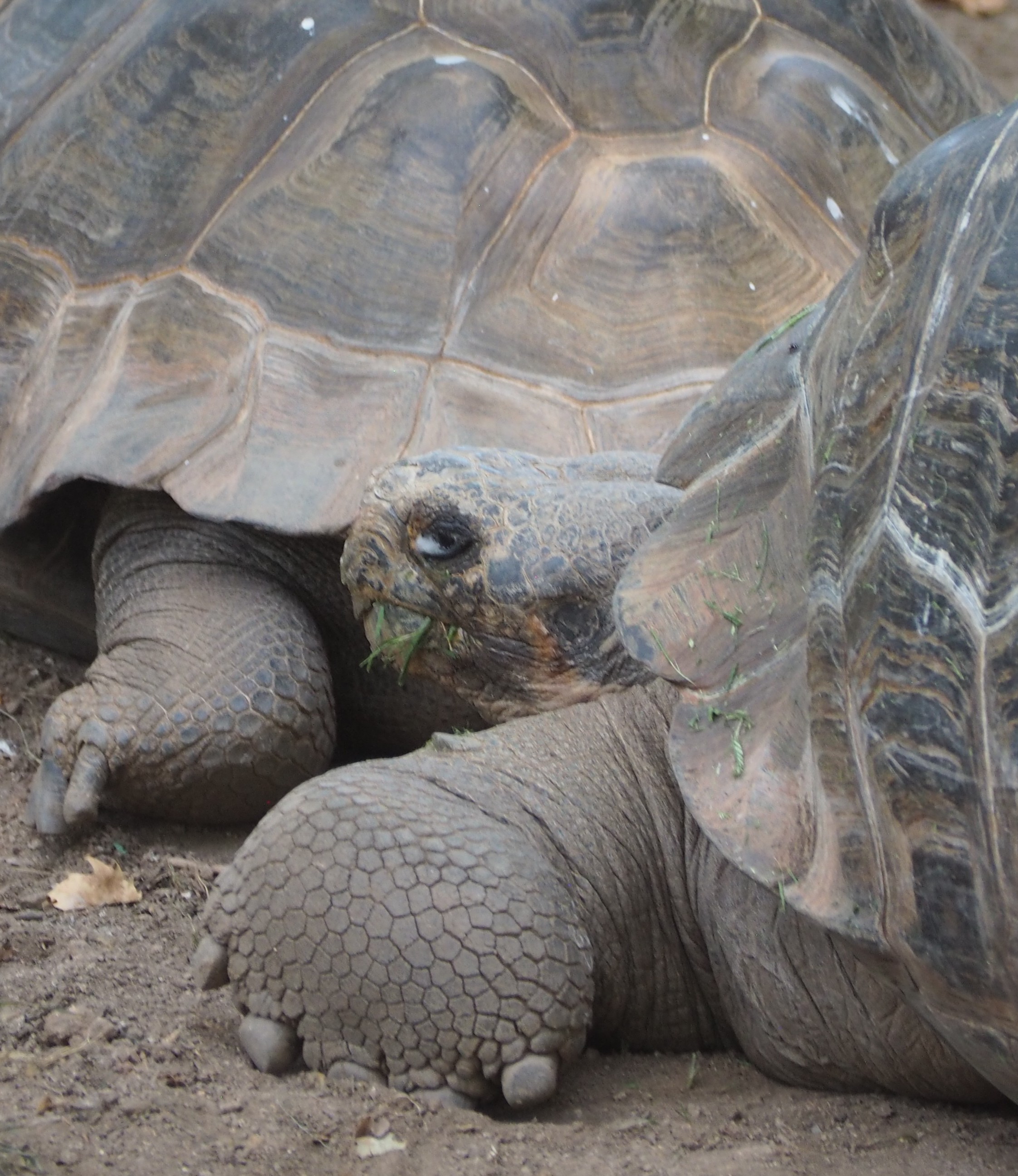
“Wow, this is impressive even for a giant tortoise!” – was my first and honest reaction when I met Jumbo for the first time in ‘person’. Jumbo is a 215 kg male Galápagos giant tortoise at Zürich Zoo, Switzerland, and part of the EAZA Ex-situ Programme (EEP) for his kind. Jumbo is one of many individuals whose exact island of origin is uncertain — a real challenge for conservation management of the EEP.


EEPs are population management and conservation programmes run by the European Association of Zoos and Aquaria (EAZA) to sustain viable populations of threatened species in zoos. The EAZA is an umbrella organisation of scientifically managed zoos in Europe, setting standards in animal husbandry, animal welfare and ex situ conservation. Today, just over 100 individuals are kept in European institutions – all coordinated by Dr. Claudia Rudolf von Rohr, EEP coordinator and zoological director at Zürich Zoo. Now, Zürich Zoo and us, the Biodiversity Genomics Group at the University of Oulu, have teamed up to genetically investigate the origins of Jumbo and the other tortoises within the EEP in order to improve the conservation management for these gentle giants.
The giant tortoises from the Galápagos archipelago off the Pacific west coast of Ecuador already inspired Charles Darwin’s theory of biological evolution. Every island was inhabited by slightly different looking giant tortoises as he already emphasised in ‘The Voyage of the Beagle’ (1839):
“I have not as yet noticed by far the most remarkable feature in the natural history of this archipelago; it is, that the different islands to a considerable extent are inhabited by a different set of beings. My attention was first called to this fact by the Vice-Governor, Mr. Lawson, declaring that the tortoises differed from the different islands, and that he could with certainty tell from which island any one was brought. […] The inhabitants, […] state that they can distinguish the tortoises from the different islands; and that they differ not only in size, but in other characters.“
Nowadays, all the different Galápagos giant tortoises are highly threatened species (International Union for Conservation of Nature (IUCN) Red List of Threatened Species). Some of the islands already lost their unique tortoises to extinction. On the islands themselves, captive breeding is one of the major strategies to tackle the species’ population declines. The animals can reproduce under controlled conditions, and the hatchlings can start their tiny lives with sufficient food and safe from threats. If big and healthy enough, those young tortoises can be released into their native habitats. The zoo in Zürich is the most successful breeder of Galápagos giant tortoises in Europe, while also coordinating the EEP.
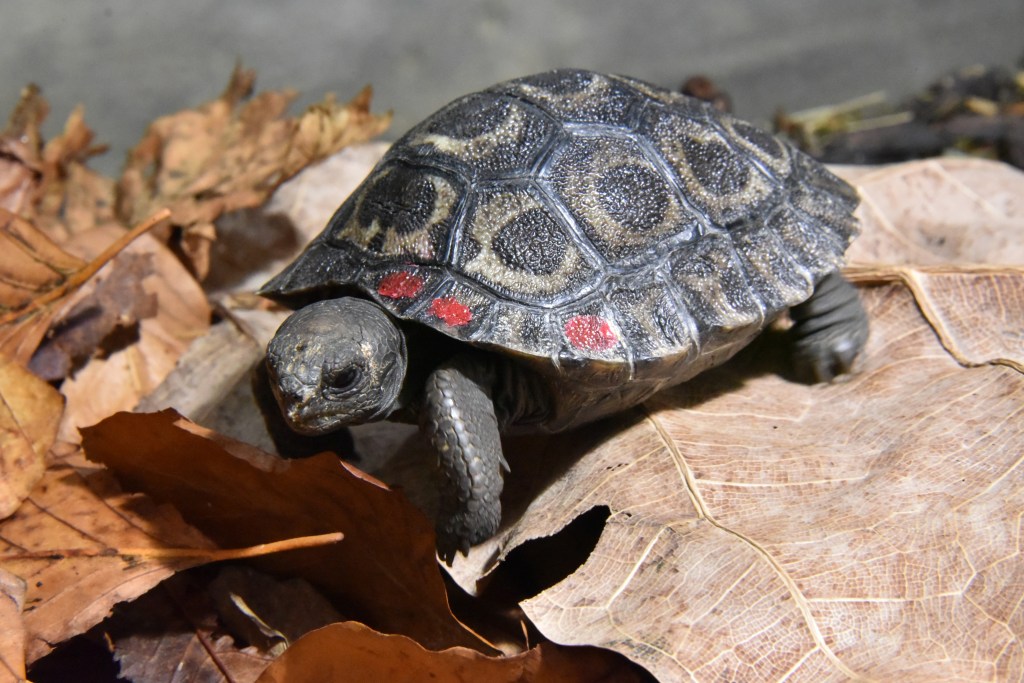
Since colonial times giant tortoises reached Europe here and there. Some individuals like Jumbo were imported to Europe before international law and zoos improved their conservation policies. Today, Jumbo is a proud father of around 100 offspring. The problem: we do not exactly know from which islands each individual came from originally and therefore which species of Galápagos tortoise they belong to. It is even more complicated since throughout European occupation of the archipelago, giant tortoises served as rich sources of meat for sailors and were shipped between the islands. This means that even if we know the origin of an individual, we cannot be certain about the exact species. But this knowledge is essential for a breeding program with the goal to potentially provide giant tortoises for reintroductions on their native islands.
What Darwin recognised almost 200 years ago has been genetically confirmed meanwhile: fifteen distinct species (twelve extant and three extinct) on ten different islands of the Galápagos archipelago are scientifically recognised today. These differences in the tortoises reflect the unique adaptations that are needed to survive in the different environments found on each island. We as the research team in Oulu will now investigate the individuals of the European zoo population and assign them to those genetically known natural populations.
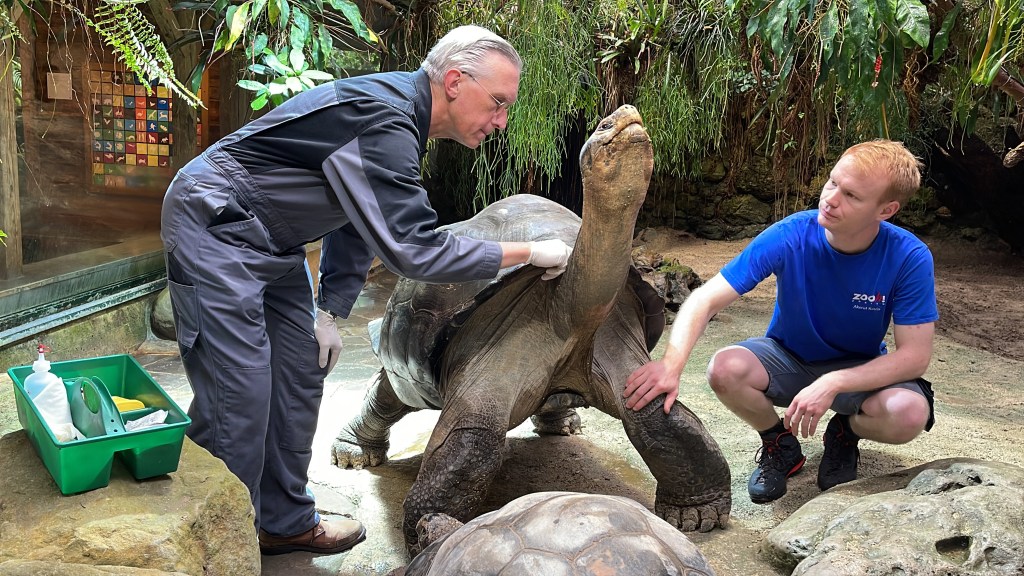
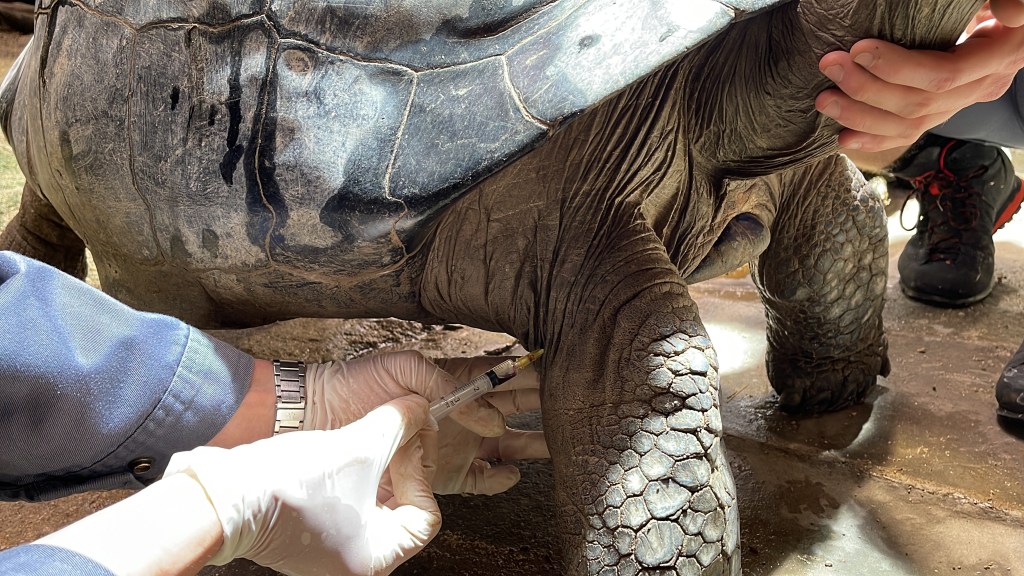
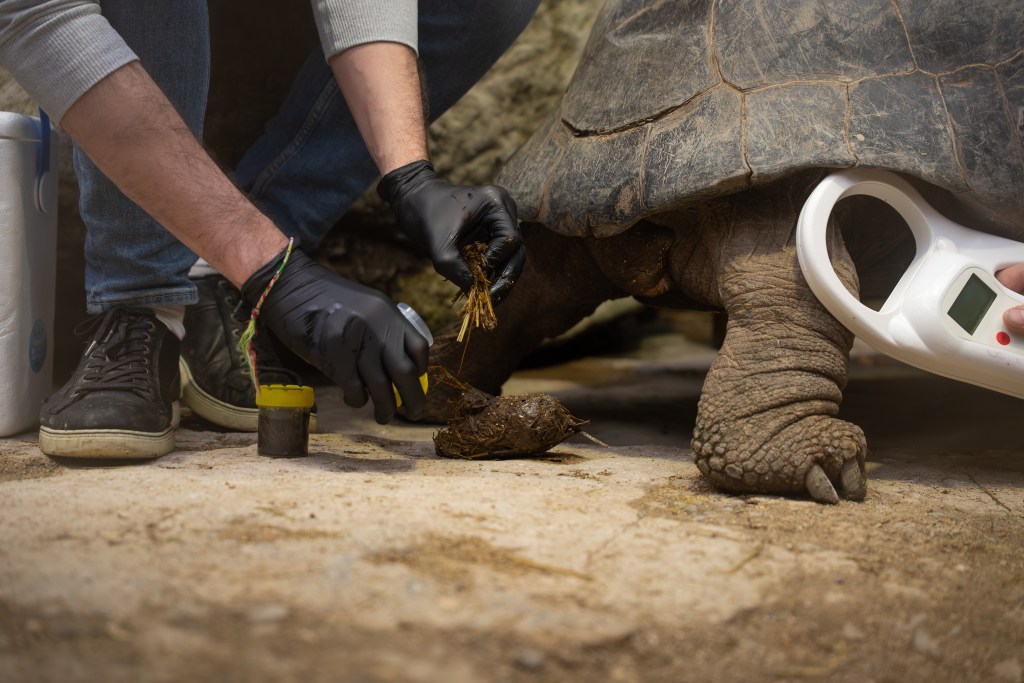
The zoo was able to provide blood samples that were left over from veterinarian examinations. During the last months, Jan Mutter, Joshua Rentsch, Kim Manetsch, and Miriam Göbel, zookeepers, and the zoo curator responsible for Jumbo and the other tortoises at Zürich Zoo, additionally collected swab samples and droppings that will also serve as genetic samples for us here in Oulu. While blood samples are high-quality samples for genetics, droppings were collected for methodological tests. We want to test whether the genetic identifications can also be done with non-invasive samples such as faeces. If the answer is yes – future analysis does not need invasive blood collection. This is potentially interesting for genetic monitoring of the wild populations in the Galápagos and a valuable way in which research on zoo populations can directly improve in-situ conservation.
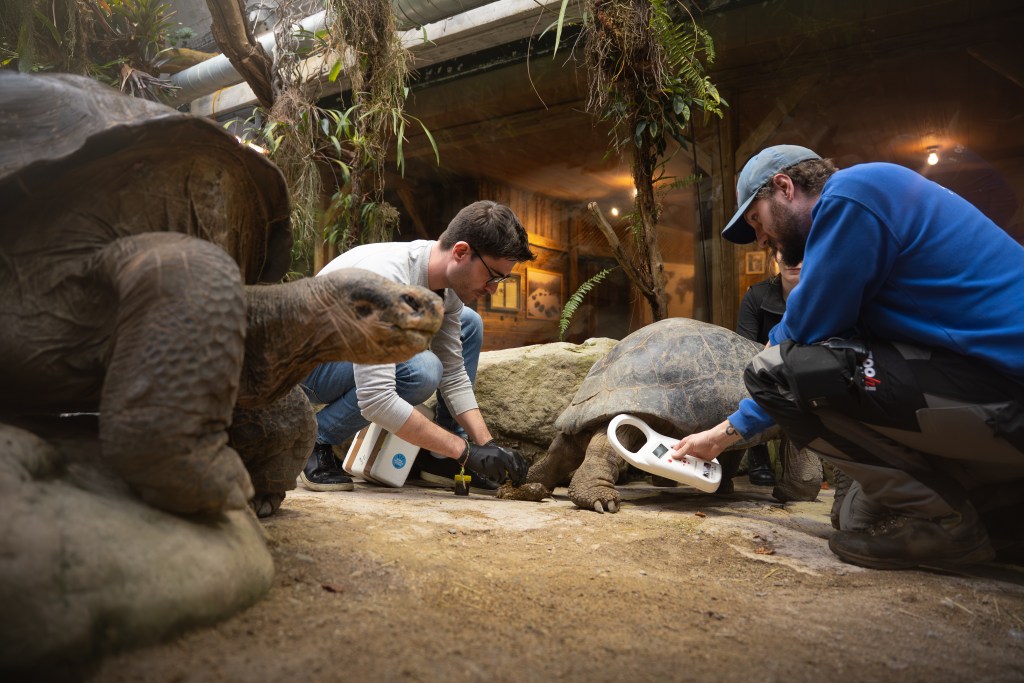
A popular detail about their biology makes the case of the Galápagos giant tortoise truly special. Thanks to the remarkable longevity of these reptiles, the original founders from the Galápagos Islands are still alive. Jumbo and his lovely female, Nigrita, arrived at Zürich Zoo in the 1960s and 1940s respectively, and have since given rise to 100 baby tortoises! Together with Jumbo, Nigrita and some others individuals, we will be able to include the original founder individuals brought to Europe which is pretty unique for ex-situ populations!
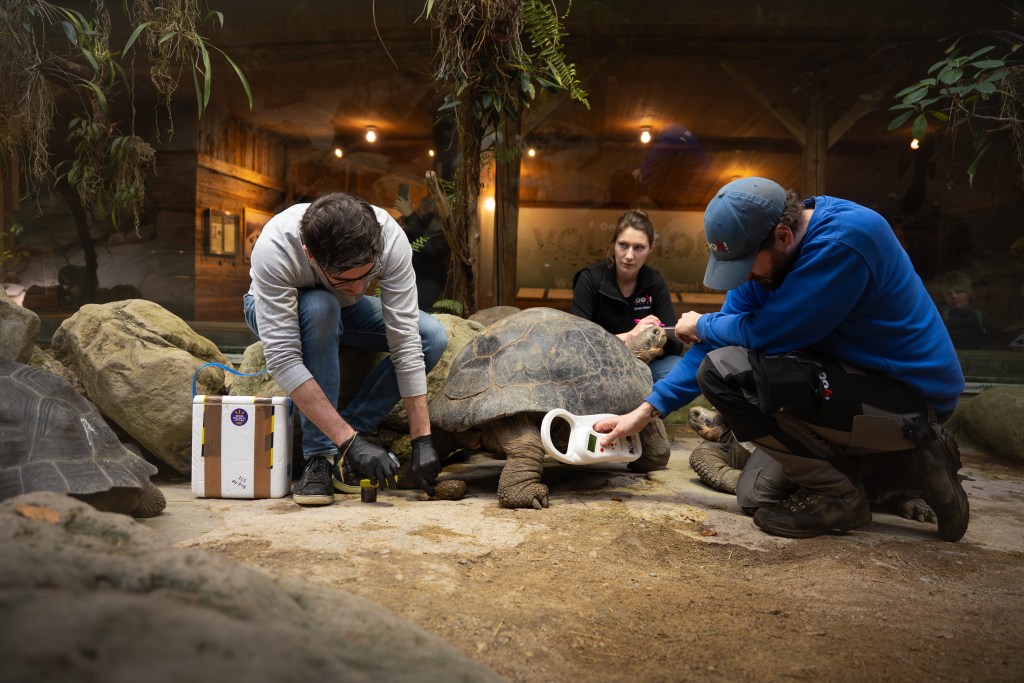
Recently, I travelled to Zürich to ensure that the valuable samples reach Oulu safe and sound. I took the genetic samples back to Oulu in a small cooling box as carry-on luggage, along with all the necessary legal paperwork, which had taken several weeks to obtain. Soon, more samples from other zoos across Europe will make their way to Oulu for analysis.
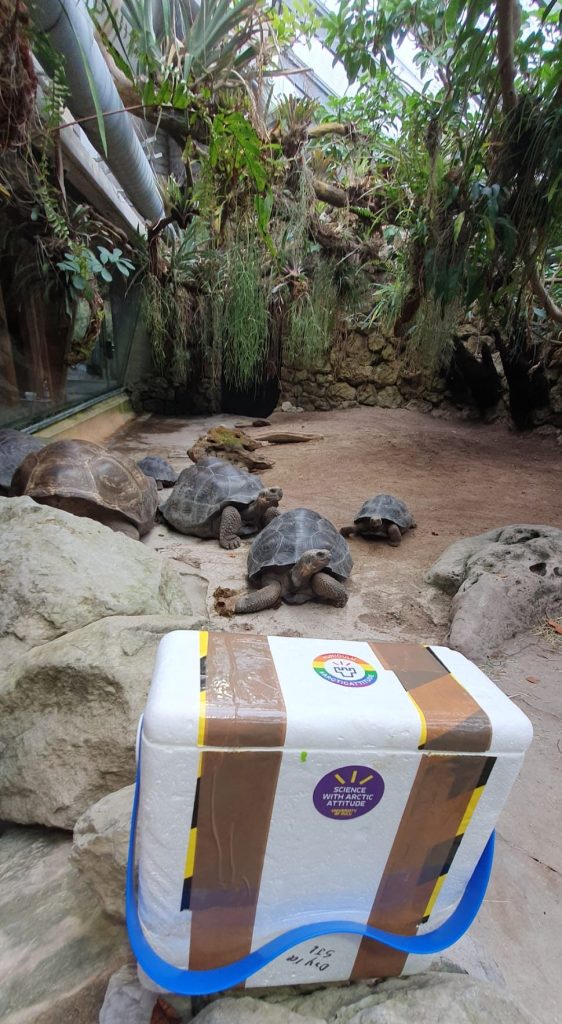
Now, Hans-Peter Zopf, conducting his Master’s thesis on this population study, will process and analyse all those samples in the next months in the molecular lab of the Ecology and Genetics Research Unit in Oulu. We are investigating mitochondrial and nuclear DNA to assign captive individuals to their natural populations. This aligns with the One Plan Approach (OPA), as genetics is the most effective method for evaluating populations in terms of their value to species conservation.
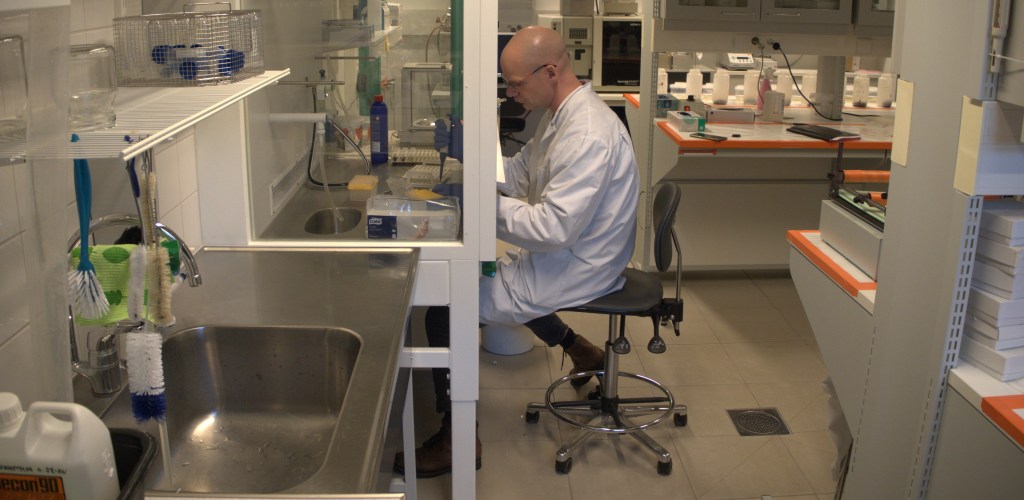
As a very applied research project, we work very closely with the stakeholders. The genetic results from Oulu will support the decision-making about the future of the European ex-situ population of the Galápagos giant tortoise in Zürich. This project is funded and made possible by the Swiss Association of Friends of the Galápagos Islands and the Ventura Wildlife Foundation & Ventura Wildlife Services.
Media Coverage
Online and Print Media
Online Article: University of Oulu (2026). Genetic research in Oulu supports conservation of Galápagos giant tortoises. University of Oulu, 27.03.2026. (English/Finnish)
Social Media
Authors
Related Project
Collaboration Partners

Blog category
Funding



Leave a comment