
If you’re a fan of seafood, you will have encountered them before. Small, dark blue or brown, hard on the outside but soft and squishy inside. The blue mussel. But that shell hides more than just an ingredient for Frutti di Mare.
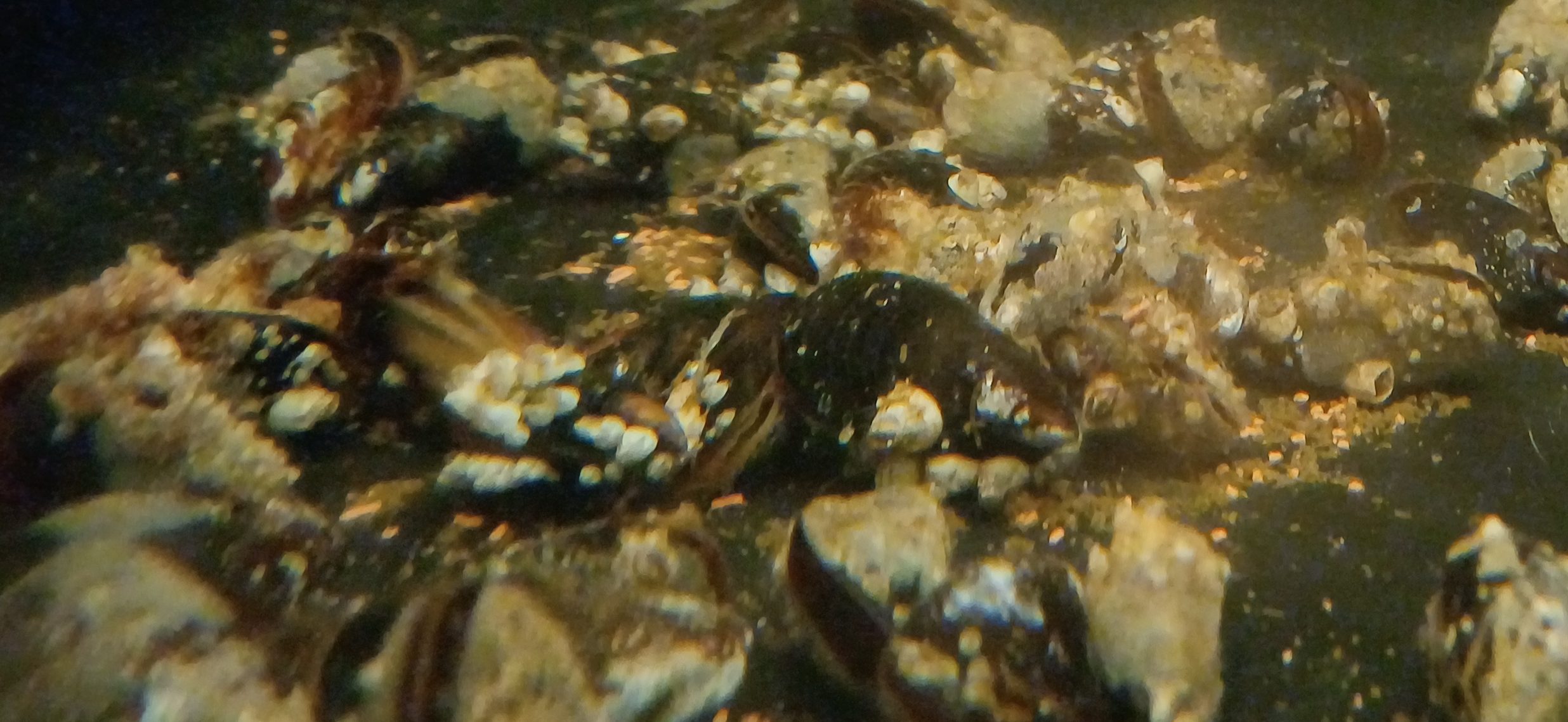
Going for a walk along the shoreline of Southern Finland, one can find the remains of one of the region’s most important animals: dark blue to brown shells, with a shimmering inside, laying along the water’s edge. Their living relatives, densely packed side by side, are hidden away several meters below the surface. In total amount of biomass, the Baltic blue mussel is dominating this ecosystem.
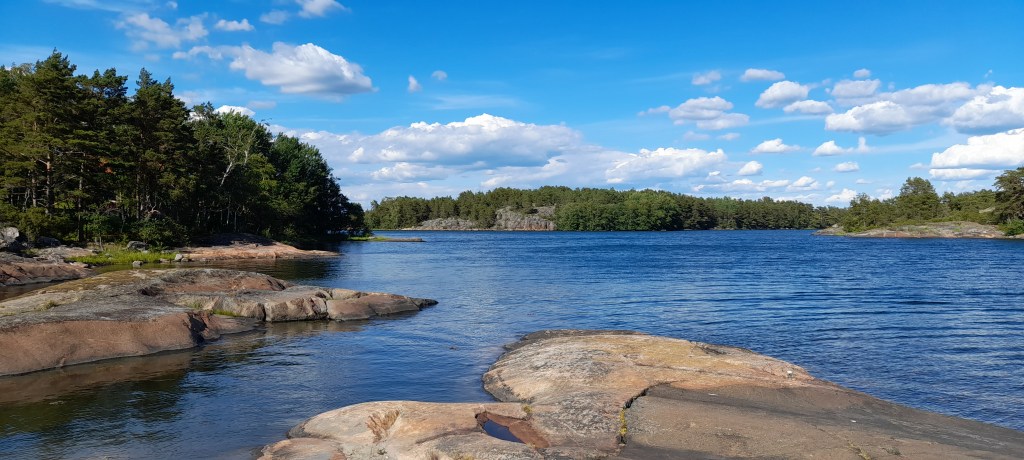
The Baltic blue mussel, Mytilus trossulus, may not be as well-known as its close relative, the common blue mussel Mytilus edulis, but it fulfils the same important ecological roles. Blue mussels are known as foundation species, meaning they have a disproportionally large role in shaping their ecosystem. So without further ado, let’s dive into what that means.
Filtering snacks
Mussels are filter feeders, which means they are actively cleaning the ecosystem. In the case of the Baltic blue mussel, this means that each individual passes up to 25 litres of water through its body every day, removing plankton and organic particles with its gills. This also plays an important role in recycling nutrients. As they accumulate the small particles in the water that are otherwise unusable for larger animals, mussels become small packages full of nutrients. This makes them an important food source for many species of fish and sea birds, like the endangered common eider.
Open shell, closed shell
Their feeding also has other benefits to the ecosystem: When taking in pollutants like pesticides, heavy metals and microplastics, they also reflect the health of their habitat. Their response to changes in water quality can be used to monitor the state of their environment, like canaries in a coal mine. The easiest way to observe this is by measuring how long they close their shell. A famous example is the Municipal Water Supply and Sewerage Company (MPWiK) in Warsaw, where clams are used to monitor the quality of drinking water using little sensors to detect when they are closed.
Engineer of the sea
Adult mussels glue themselves to the ground with dark, fibrous threads, the byssus, forming large, dense beds. Within these beds, small animals can find shelter from water movement and predators. They can also create a solid foundation for other species on an otherwise unstable sandy seafloor.
While all species of Mytilus form mussel beds, some do this better than others. It is generally hard to break a common blue mussel out of the structure without the use of tools, but the Baltic blue mussel can easily be collected by hand. In rough weather conditions, large clumps can break off the mussel bed and tumble around the seafloor. Add to that a thin shell, and the Baltic blue mussel earns itself an unfortunate nickname: The foolish mussel.
By any logic, they should not even be here. So why is it that of all mussel species it is the foolish mussel, a species that is known for its thin shell and ease of collection, that is thriving in the Baltic Sea?
The salty, the fresh and the brackish
In the Baltic Sea, salty water from the North Sea mixes with large amounts of freshwater from rivers. This makes it one the largest brackish water bodies in the world, where salinity is 70 to 90 percent below normal ocean levels.
While many marine animals are challenged by this low salinity and do not make it past the Danish Straits, the Baltic blue mussel defies these odds. Somehow, this specialist has found a way to cope with the harsh environment, for example with size: Blue mussels in the Baltic are much smaller than their relatives living in the North Sea, and they only get smaller the lower the salinity drops.
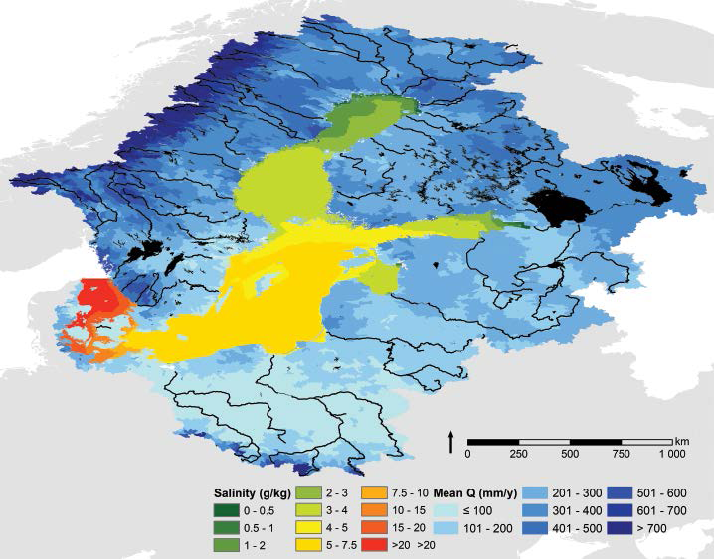
At some point though, the salinity limbo is too much even for this little engineer.
Increased rainfalls, linked to climate change, lead to further decrease in salinity in the Baltic Sea, pushing back the edge of the Baltic blue mussel’s range. At a salinity of around 4.5‰ (around Vaasa in the North and Kotka in the East), the mussels have shrunk to only 1 centimetre in size. Below that, at the end of the Gulf of Finland and the Northern Bothnian Bay, they cannot survive anymore.
Even if most people never notice them, these mussels quietly engineer and sustain the ecological balance of the Baltic’s coastal waters. For Finland, where coastal ecosystems are central to culture, economy, and identity, understanding and protecting this species and its ecosystem is not optional, it is essential. That’s why we have created the Baltic Baywatch research project. If you want to know more about what it is we focus on, follow the link down below to the project page.
Authors
Related Project


Leave a Reply