
We are happy to announce that our scientific article “A Prelude to Conservation Genomics: First Chromosome-Level Genome Assembly of a Flying Squirrel (Pteromyini: Pteromys volans)” alongside with a so called chromosome-level genome assembly itself has been published in the journal Ecology and Evolution in Septemper 2025! This is a milestone in our research project around the Siberian flying squirrel and the genome assembly will serve as a reference for many further research applications and will facilitate conservation for the species. But how? And what is a chromosome-level genome assembly all about?
First things first: A genome is the entire genetic information, encoded in DNA, of an organism. Now, the genome of the Siberian flying squirrel was fully sequenced and reconstructed in its chromosomal structure. It will serve as a reference genome for following research and conservation efforts.

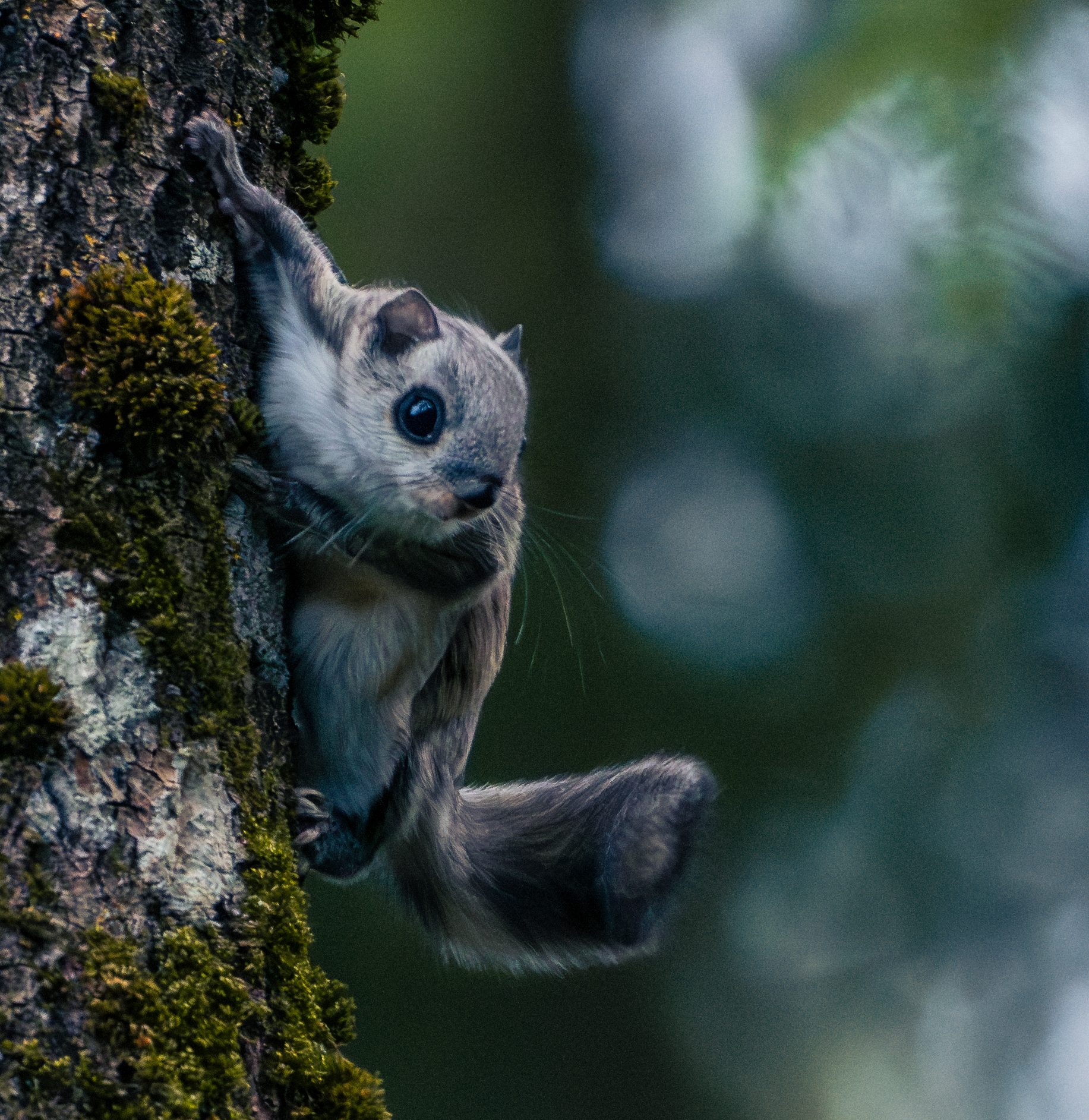
The Siberian flying squirrel is one of our focal species since we started as a new research group in 2023 here at the University of Oulu. Of course, it is an incredibly cute animal – but there is much more to it!
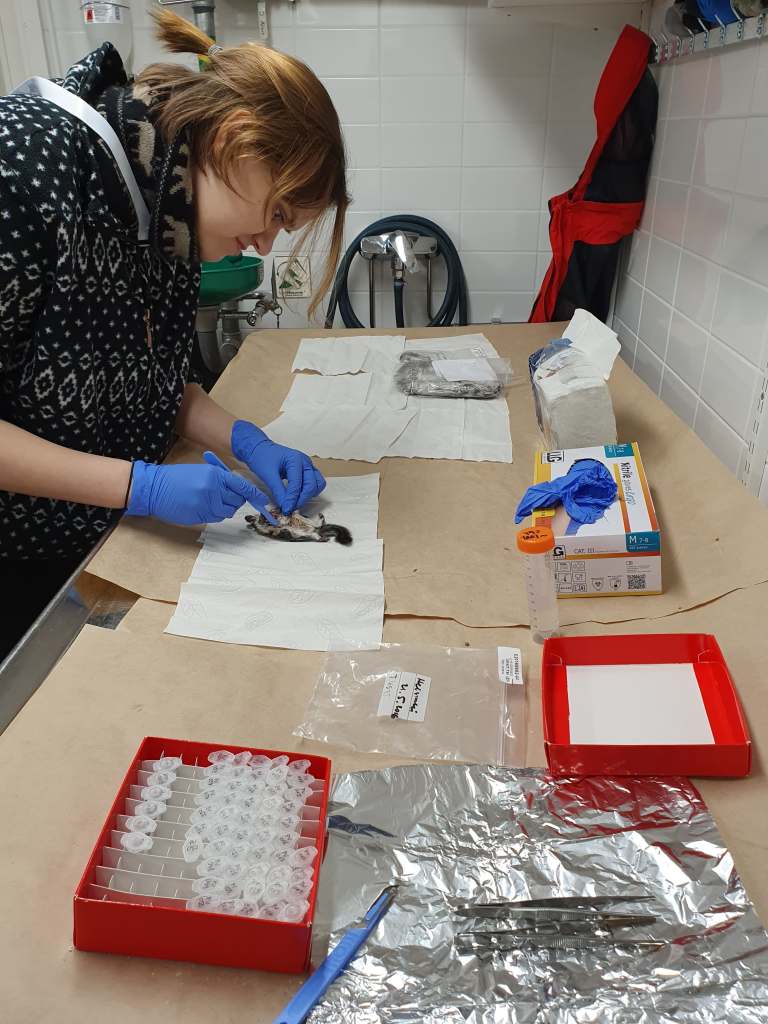
The sequenced individual was a male that died of natural causes near Kuopio, Finland (see map above). The small body found its way to the Zoological Museum of the University of Oulu. From a small piece of tissue, we were able to extract enough intact DNA for the successful genome assembly. They were able to reconstruct gapless nuclear and mitochondrial genomes as well as uncover the chromosomal architecture, and compared it to related species like the red squirrel, also native to Finland. In fact, it’s the first chromosome-level genome assembly of any of the over 50 flying squirrel species worldwide! We showed how the Finnish individual fits into the evolutionary tree of rodents based on genomic data and how the genome itself differs in its structure from related species. With about 2.8 billion base pairs, the whole-genome assembly is similar in size to the human genome with 3.2 billion base pairs.
But why put so much effort into the whole genome of such as small rodent?
Finland together with Estonia represents the westernmost distribution of this species that otherwise occurs throughout the Eurasian boreal forest until the Pacific coast of Russia, Korea, Japan and China. It is, evolutionary speaking, unique being the only representative of any flying squirrel species in Europe today. While the International Union for Conservation of Nature (IUCN) red-lists the species globally under ‘Least Concern’, the Siberian flying squirrel is considered as ‘Vulnerable’ with declining populations in Finland. Estonia has also some last few populations left, a total of only about 300 individuals, and is classified as ‘Critically Endangered’. Throughout the last centuries the flying squirrel went extinct in countries like Latvia and Lithuania. Finland, despite of the declining numbers, is the last stronghold for the Siberian flying squirrel within the European Union (EU). This is important because throughout most of its global range it does not have any protective status, whereas it is strictly protected under the Habitats Directive in the EU. From this arises a special responsibility from Finland and Estonia towards its species conservation. Former studies at the University of Oulu (Santangeli et al. 2013, Wistbacka et al. 2018) indicate that if the current population decline is not stopped by more effective conservation management, the flying squirrel might disappear from Finnish forests and therefore from Europe entirely.
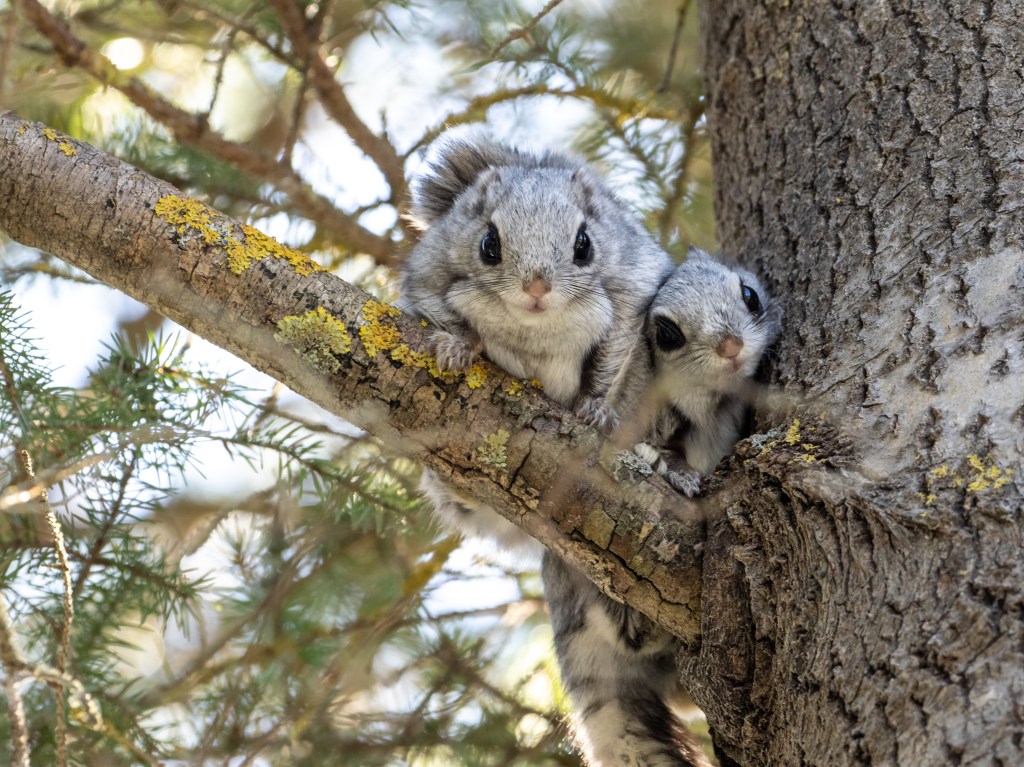
What surprised me, as a German – now living in Finland, about the species itself is, that while most of Europeans are not aware of the flying squirrel in Europe at all, this fluffy glider sometimes has a quite loaded reputation in Finland. Its necessary protection limits the way forestry is currently executed in Finland. Many Finns privately own land and rightfully benefit from the wood yields. This results quickly in an image of the flying squirrel as an ‘annoying troublemakerpest‘ hampering forestry.
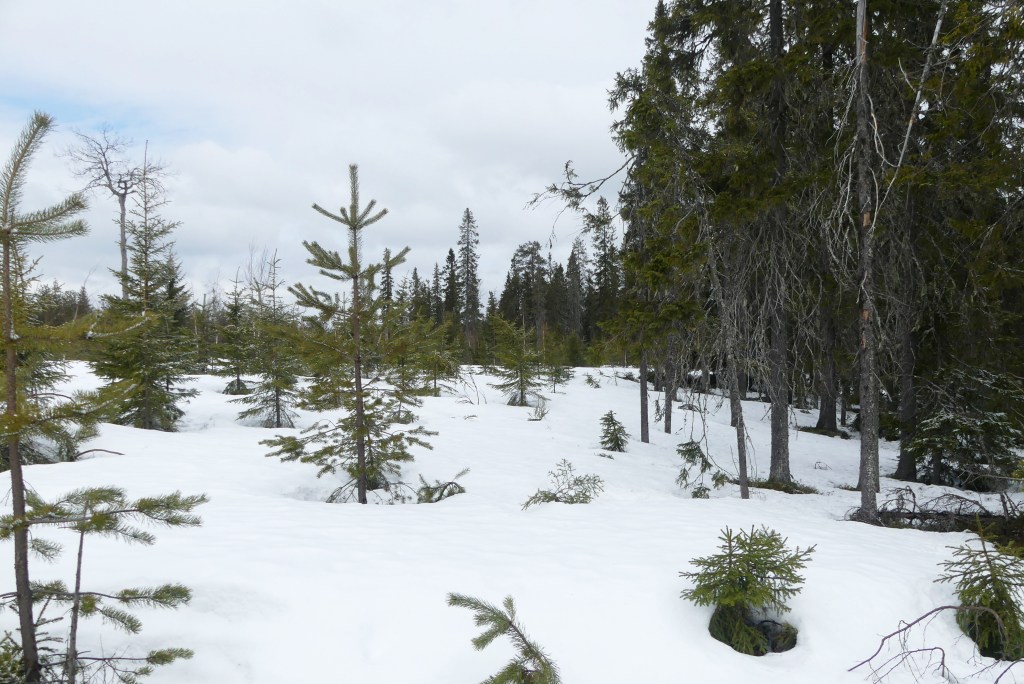
In fact, if there are flying squirrels in your forest you most likely provide a home to a lot of biodiversity generally. Siberian flying squirrels need an array of conditions in their habitat that can be found in healthy species-rich forests. Flying squirrels were already proposed to be a good ambassador for healthy Finnish forests by others. And there are ways to do profitable forestry without eradicating entire species. With our ongoing research we want to provide decision-makers insights into how the flying squirrels live and what they need to thrive together with forestry.
Since it is such a Finnish conservation story we decided to publish our scientific paper including a Finnish abstract, unsual for scientific publications of this international format. Moreover, we hope to provide the data to find solutions in the conservation conflict regarding this unique species in Finland. The new genome assembly will be the basis for ongoing research of the species’ biology, but it is also essential for the development of molecular tools for conservationists in order to protect this small inhabitant of the Finnish forests.
We also started a citizen science project, inviting everybody interested to sample flying squirrel droppings for a wider non-invasive genetic monitoring of the Finnish populations. Check it out for more details and on how you can participate in their research!
Learn more on what we do and how you can help:
> Flying Squirrel Citizen Science project
Publication
Peer-reviewed Publication: Wehrenberg, G., Kiebler, A., Greve, C., Beltrán-Sanz, N., Ben Hamadou, A., Meißner, R., Winter, S., & Prost, S. (2025). A Prelude to Conservation Genomics: First Chromosome-Level Genome Assembly of a Flying Squirrel (Pteromyini: Pteromys volans). Ecology and Evolution, e71905. https://doi.org/10.1002/ece3.71905
Media Coverage
Online, Broadcast & Print Media
TV Report: Korkala, H. (2025). Oululaistutkijat ratkaisivat liito-oravan perimän ensimmäisinä maailmassa – tätä se tarkoittaa. Yle, 20.11.2025. (Finnish)
Press Release: University of Oulu (2025). The entire genome of the flying squirrel assembled for the first time in Oulu – boosts conservation efforts. University of Oulu, 20.11.2025. (English/Finnish)
Social Media
Authors
Related Project


Leave a Reply