
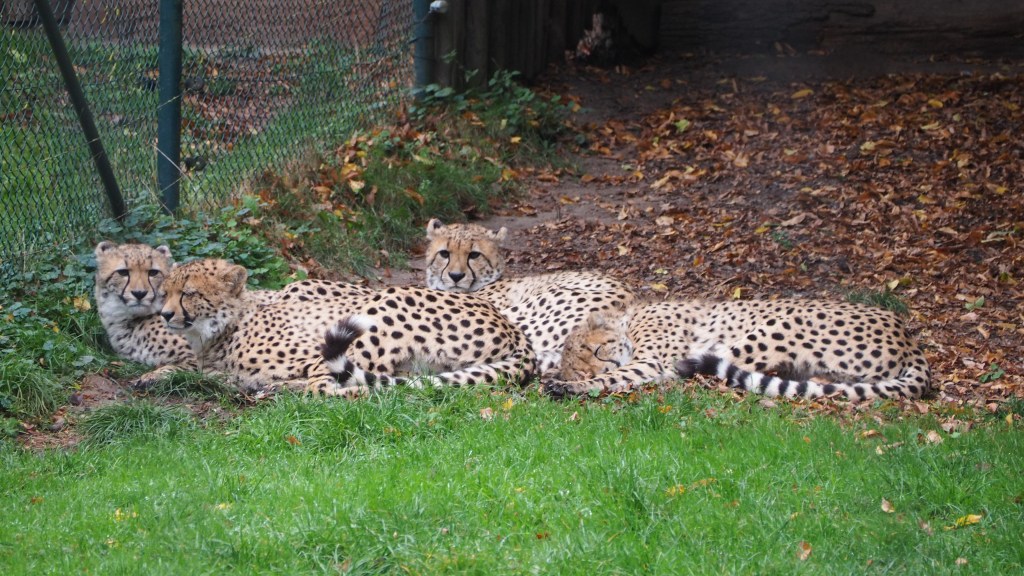
The cheetah (Acinonyx jubatus) is widely known as the ‘fastest land animal in the world’. However, despite its popularity, many aspects of this charismatic species remain unknown.
This fast sprint hunter, with its unique adaptations, stands out among other felids. Despite its relatively large size, it belongs to the small cat subfamily (Felinae) and is more closely related to any house cat than to species like the leopard, with which it is often confused. Its hunting strategy — outrunning small to mid-sized prey, such as gazelles, in the open grasslands of Africa and southern Asia — makes the cheetah highly dependent on large, intact areas of its native habitat.
Human-induced habitat destruction has led to severe and ongoing population declines. Today, the IUCN lists the cheetah as Vulnerable (VU). Many subspecies, such as the Asiatic cheetah (Acinonyx j.venaticus) and the Northwest African cheetah (Acinonyx j. hecki), are on the brink of extinction, with in some cases only dozens of individuals remaining in the wild. Like many large carnivores, human-wildlife conflict, especially related to livestock, and the cheetah’s appeal in the illegal wildlife trade have put additional immense pressure on wild populations.
We need a deeper understanding of the cheetah in order to implement more effective conservation measures. To achieve this, we use genomic data from all known wild populations to unravel their evolutionary history and population structure to inform conservation stakeholders. Based on this genomic data, we develop applied, cost-efficient, and non-invasive molecular tools to support genetic monitoring and guide in situ and ex situ conservation action.
Funding
Collaboration Partners





Worked on by
Students
Siri Hiljanen
Lucas Bogaert
Besufekad Wolde
Publications
2024
Peer-reviewed Publication: Meißner, R., Mokgokong, P., Pretorius, C., Winter, S., Labuschagne, K., Kotze, A., Prost, S., Horin, P., Dalton, D., & Burger, P. A. (2024). Diversity of selected toll-like receptor genes in cheetahs (Acinonyx jubatus) and African leopards (Panthera pardus pardus). Scientific Reports, 14(1), 3756. https://doi.org/10.1038/s41598-024-54076-y
2023
Peer-reviewed Publication: Winter, S., Meißner, R., Greve, C., Ben Hamadou, A., Horin, P., Prost, S., & Burger, P. A. (2023). A chromosome-scale high-contiguity genome assembly of the cheetah (Acinonyx jubatus). Journal of Heredity, 114(3), 271-278. https://doi.org/10.1093/jhered/esad015
Completed Theses
Master’s Thesis: Hiljanen, S. (2025). Population genetics of endangered African and Asiatic cheetahs (Acinonyx jubatus). https://urn.fi/URN:NBN:fi:oulu-202510086237
Outreach
Online and Print Media
Newspaper Article: Platner, L. (2025). Für den Zoo ist die Tier-Forschung eine wichtige Säule – Wie Konfliktlösung mit DNA-Analysen möglich ist. Westdeutsche Zeitung, 01.03.2025, 19. (German)
Online Article: Wuppertal Zoo (2025). Konfliktlösung mit DNA-Analysen. wuppertal.de. (German)
